SEO
Organic Search Changed. Here Is What "Ranking" Means Now.
For a B2B company, ranking no longer means only a blue link on page one. It increasingly means being the source that Google's AI Overviews, ChatGPT, and Perplexity quote when your buyer asks a question, often before they click anything at all.
The good news: the work that earns a citation is mostly the same work that earns a ranking. And it rests on one unglamorous truth.
The core idea: you cannot get found, or cited, for content you do not have. Most of the real work is research and building the right content. Then you make a system do the repetitive parts.
Here is the process, step by step.
Step 1: Start With the Questions Your Buyers Actually Ask
Everything begins with real demand, not a keyword guess. Pull the actual questions buyers type and ask, then cluster them by intent and by where they sit in the funnel.
Sources: Google's People Also Ask, Semrush and similar query data, and the questions your sales team hears on every call.
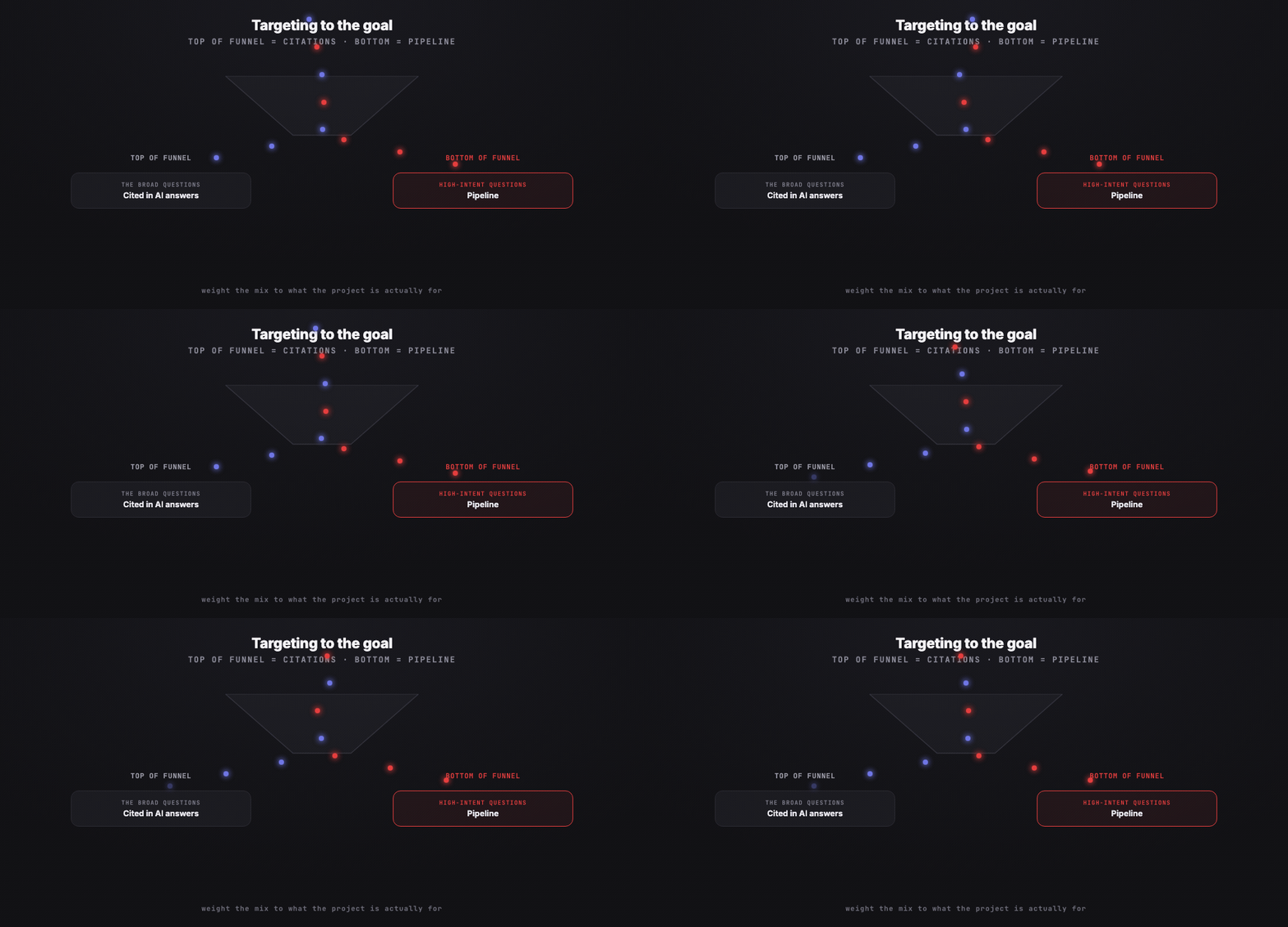
Top of funnel ("what is," "how does," "why"): the broad, educational questions AI answers love to pull from. Weight here when the goal is authority and citations.
Bottom of funnel ("pricing," "vs," "best for," "for a specific use case"): the questions that sit right next to a buying decision. Weight here when the goal is pipeline.
The mix is a deliberate choice tied to the outcome you are actually after, not a default. The animation below shows how the same research splits by intent.
Step 2: Build the Content That Answers Them, on Your Own Site
This is the step most companies skip, and it is the whole game. You get cited for content you actually publish, on a domain where the authority compounds over time. So create genuinely useful pages that answer the clustered questions directly and completely. One page, one job. No thin content written for a robot.
Step 3: Structure It So Both Google and the AI Models Can Use It
Same content, formatted to be liftable. AI models quote the passage that is easiest to quote, so make that passage yours:
A direct answer in the first sentence, before any windup.
One clear claim per passage, in the words the buyer actually uses.
Real data with a cited source attached, because models trust what they can corroborate.
Schema (Organization, Article, FAQ, HowTo) so machines understand exactly what they are reading.
Do this well and a single page can earn the citation. Here is the journey a page takes from a buyer's question to a quoted answer.


Step 4: Set the Entity Foundation, So the Models Know Who You Are
A model cites entities it can resolve with confidence. Make your company one: consistent Organization and Person schema, sameAs links to the profiles that matter, and firmographics that agree everywhere they appear, from LinkedIn to Crunchbase to the industry directories. For B2B, the model being sure who you are is half the battle.
Step 5: Open the Doors for the AI Crawlers
Explicitly allow the crawlers you want (GPTBot, PerplexityBot, ClaudeBot, Google-Extended), make sure the content is server-rendered and actually reachable, and publish an llms.txt that points them straight at your answer content. If the crawler cannot get a clean read, none of the work above matters.
Step 6: Automate the Pipeline, and Keep a Human on the Gate
Research, drafting, a quality check against a fixed standard, publishing, and indexing can all run on a system, with a human approving what goes out the door. That is the difference between doing this once, for one page, and doing it reliably across a hundred pages without the quality slipping. The animation below is that flow end to end.

Step 7: Get Indexed Fast, Then Measure the Right Thing
New and updated pages should be submitted to Google's index the same day they publish, so they get found in hours instead of sitting for weeks. Then close the loop: re-run your buyers' questions through the AI engines on a schedule and track whether you are the cited source, not just where you rank. That gap is what feeds the next round of content.

It Is a System, Not a Checklist
The reason this works is that it is not a one-time project. It is a repeatable operating system, with a documented process and automation behind every step. Build it once and dropping it into a new set of pages, or a new business, becomes implementation instead of invention.
Frequently Asked Questions
How do you get a B2B website cited in AI answers?
Research the exact questions buyers ask, publish clear, source-backed content answering them on your own site, structure it with schema so models can lift it, resolve your brand as a confident entity, allow the AI crawlers, and get indexed fast. Then track citation frequency, not just rank.
Is on-site content or off-site link building more important for B2B organic?
The on-site content is the foundation, because you cannot get found or cited for content you do not have. Off-site authority and corroboration amplify it, but the answer content has to live on your own domain first.
How long does it take a B2B site to rank organically?
With the foundation fixed and the right content shipping consistently, meaningful movement on realistic terms usually shows in three to six months. AI citations can appear faster once the content is structured and the crawlers are allowed in.
Can this really be automated?
The repetitive parts, research, drafting, quality checks, publishing, and indexing, can run on a system with a human approving anything that goes live. That is how you hold quality across many pages without adding hours.