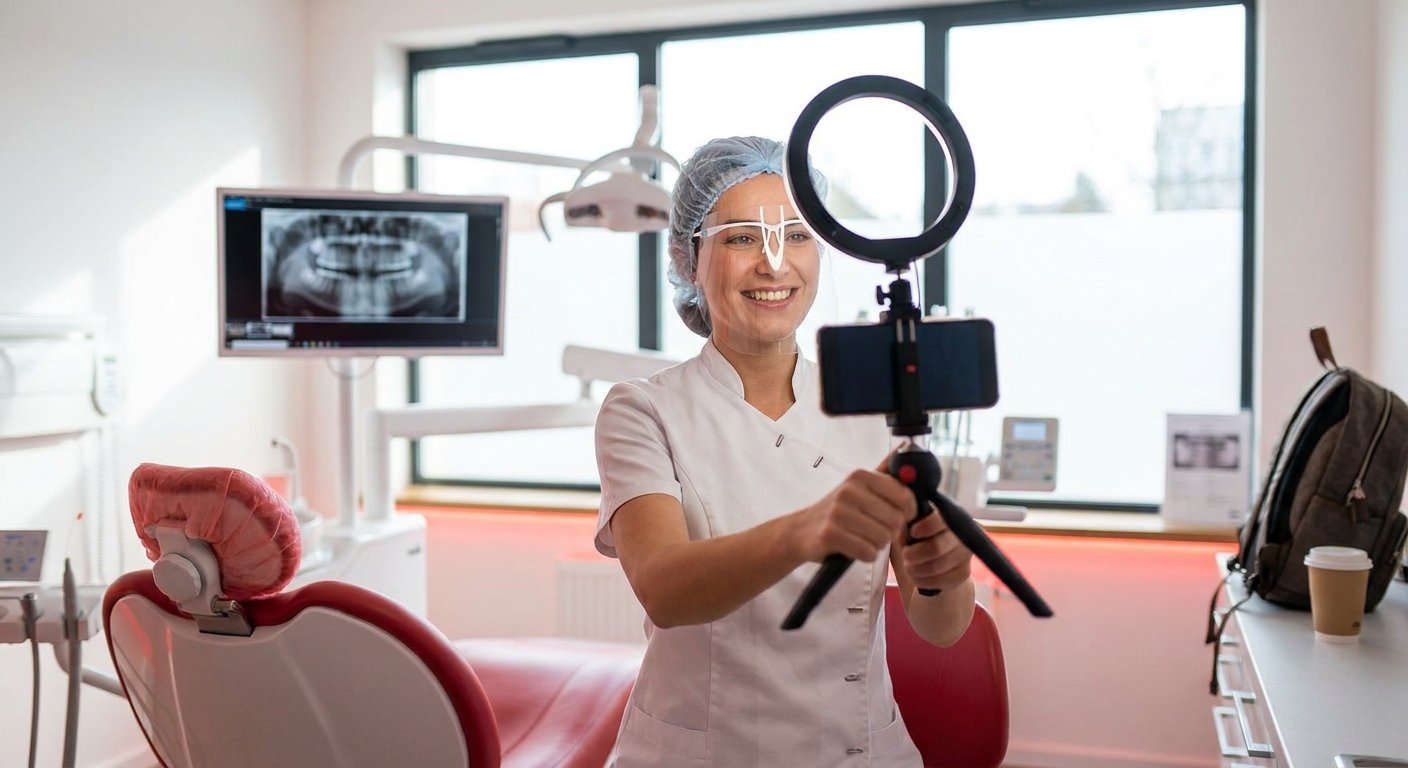

Friendly dentist filming a short social video on a smartphone in a bright modern dental operatory
Dental Video Scripts

10 Short-Video Scripts Your Dental Practice Can Film This Week

Your future patients are scrolling right now, asking the questions you answer every single day. These ten ready-to-film scripts give you the hook, the talking points, and the call to action for each, so your team can post content that builds trust and books visits, without staring at a blank page.

10
ready-to-film scripts with a hook, talking points, and a CTA for each
Source: This playbook
3 sec
the window your hook has to stop the scroll before a viewer is gone
Source: Short-video best practice
1 phone
all the gear you need to film authentic, patient-trusted dental video
Source: No studio required
1 week
enough time to film, caption, and post every script on this page
Source: CMC content playbook
Blake Hundley, Founder of Closing More Cases
Written by Blake Hundley
Founder, Closing More Cases. Blake helps dental practices across the United States attract more new patients and turn attention into booked visits. His team builds the content, marketing, and follow-up systems that put practices in front of the patients searching for them.
Published June 23, 2026 | Last updated June 2026
Why It Works

Why Short Video Wins for Local Dental Practices

Choosing a dentist is a trust decision, and trust is built by seeing and hearing a person, not by reading a list of services. Short video is the fastest way for a stranger in your area to meet your practice before they ever pick up the phone. When a potential patient watches you calmly explain what an implant costs or what their first visit feels like, you have already started the relationship. By the time they search for a dentist, you are not a random name on a map, you are the practice that already answered their question.

Patients Already Search the Way These Scripts Are Written

Every one of the ten scripts below answers a real, high-intent question that people type and speak into their phones: how much do implants cost, are veneers worth it, what does a first dental visit look like, what do I do about tooth pain at night. These are not random topics. They are the exact searches that lead to a booked appointment. Search platforms increasingly surface helpful video right alongside web results, so answering these questions on camera puts you where patients are already looking. The Google guidance on video in search rewards clear, useful clips that genuinely answer the viewer's question, which is exactly what these scripts are built to do.

Video Is the Front of Your Marketing System, Not a Side Project

Content earns attention, but attention is only the first step. A video that makes someone trust you still has to connect to a system that captures and books them when they reach out. That is why these scripts sit alongside the rest of your dental marketing services, and why the trust they build only pays off if your front desk follows up fast. Pair this content with a tight speed-to-lead playbook and the same patients you attracted on camera actually land in your chair. Video without follow-up is a missed opportunity, and follow-up without content is an empty pipeline.

The Scripts

The 10 Short-Video Scripts, Ready to Film

Each card below is a complete, film-ready script. You get a scroll-stopping hook to open with, three to four talking points to keep you on track, and a soft call to action to close. Do not read them word for word like a robot. Use the hook exactly, then talk through the points in your own voice, the way you would explain it to a patient in the chair. Pick one, film it today, and post it before you overthink it.

1
High-Value Treatment

What Dental Implants Really Cost (And Why)

The Hook

"Stop Googling 'how much do implants cost' at 11pm. Here is the honest answer no one gives you."

Talking Points
Name the range out loud, then explain why a single implant costs what it does: the surgical placement, the abutment, and the custom crown are three separate steps, not one.
Contrast the one-time cost of an implant against decades of replacing a bridge or relining a denture, so the price reframes as a long-term value question.
Address the fear directly: most patients say the procedure was far easier than they expected, and walk through what the visit actually feels like.
Mention that financing and membership options exist so the number on screen is not the number they pay that day.
Call to Action

Curious what your case would cost? Send us a message and we will walk you through it, no pressure.

2
Cosmetic

Are Veneers Actually Worth It?

The Hook

"Before you spend thousands on veneers, watch this. Your dentist probably will not tell you point three."

Talking Points
Explain who veneers are genuinely right for (chips, gaps, deep stains that whitening cannot fix) and who should consider a simpler option first.
Be honest that veneers are a permanent commitment because a thin layer of enamel is removed, and that maintenance matters.
Show or describe a real before-and-after from your own chair, not a stock photo, so it feels credible and local.
Bust the 'fake' myth: a good case is matched to the patient's face and bite, not a row of identical white tiles.
Call to Action

Want to see if veneers fit your smile? Book a consult and we will show you a digital preview first.

3
Anxiety and Comfort

Sedation Dentistry: You Can Sleep Through It

The Hook

"If fear is the only thing keeping you out of the dental chair, this 30 seconds is for you."

Talking Points
Acknowledge the fear without judgment. Say plainly that dental anxiety is common and that you treat nervous patients every week.
Walk through the levels simply: laughing gas to take the edge off, oral sedation to relax deeply, and IV options for bigger cases.
Reassure them on safety and monitoring, and explain that most patients remember almost nothing and recover quickly.
Emphasize that they stay in control: sedation is a choice you make together, not something forced on them.
Call to Action

If anxiety has kept you away, message us. We will build a comfort plan before you ever sit in the chair.

4
New Patient

What Your First Visit Actually Looks Like

The Hook

"Nervous about your first appointment with a new dentist? Here is exactly what happens, step by step."

Talking Points
Walk them from the front door to the chair: the warm welcome, the paperwork you handle for them, and meeting the team.
Demystify the exam: digital X-rays, a gentle cleaning if appropriate, and a clear conversation about what you see, in plain language.
Promise no surprise lectures and no shaming about time away from the dentist, which is a top reason people delay.
Set the expectation that they leave with a simple, prioritized plan and a clear sense of cost, not a stack of confusing forms.
Call to Action

Ready for a dentist who explains everything? Book your first visit and see the difference.

5
Insurance and Cost

The Dental Insurance Myth Costing You Money

The Hook

"Your dental insurance is not really insurance, and understanding that one fact can save you a treatment plan."

Talking Points
Explain that most dental benefits are a fixed yearly allowance, not true coverage, and that the annual maximum has barely moved in decades.
Warn about 'use it or lose it' benefits that reset every year, so delaying care often means paying more later out of pocket.
Clarify the difference between what insurance pays and what care actually costs, so a patient is never blindsided.
Reassure that your team verifies benefits up front and presents real numbers before any treatment begins.
Call to Action

Confused about your benefits? Send us your plan and we will explain exactly what it covers.

6
Cosmetic

The Truth About Teeth Whitening

The Hook

"That whitening kit you bought online might be wrecking your enamel. Here is what actually works."

Talking Points
Compare drugstore and online whitening against professional treatment honestly, including why results and sensitivity differ.
Explain why custom trays beat one-size strips: the gel reaches every surface evenly and protects the gums.
Set realistic expectations on shade change and on which stains whitening cannot fix, such as old fillings or deep intrinsic stains.
Give one practical maintenance tip they can use today, so the video delivers value whether or not they book.
Call to Action

Want a brighter smile that lasts? Ask us about professional whitening and we will tell you if you are a fit.

7
Family

When Should My Child First See a Dentist?

The Hook

"Most parents wait way too long for their kid's first dental visit. The right age will surprise you."

Talking Points
Give the clear, reassuring answer (by the first birthday or when the first tooth appears) and explain why early visits build lifelong comfort.
Describe how you make a child's first visit fun and low-pressure, counting teeth and meeting the chair, not a scary procedure.
Share one or two simple home tips for baby teeth so parents leave the video with something useful.
Reassure anxious parents that an early start prevents the painful, expensive problems that bring kids in later.
Call to Action

Time for your little one's first visit? Book a gentle kids' appointment and we will make it easy.

8
Emergency

Tooth Pain at 2am: What to Do Right Now

The Hook

"Throbbing tooth pain in the middle of the night? Do these three things before you call us in the morning."

Talking Points
Give immediate, safe relief steps: rinse with warm salt water, manage swelling with a cold compress, and avoid the trigger side.
Warn against the common mistakes, such as placing aspirin directly on the gum, which can burn the tissue.
Explain the warning signs that mean it cannot wait (facial swelling, fever, a knocked-out tooth) and need same-day care.
Reassure them that you keep emergency slots open and that calling early gets them seen fast.
Call to Action

In pain right now? Call or message us. We hold same-day emergency spots every single day.

9
Orthodontics

Clear Aligners vs Braces: Which Is Right for You?

The Hook

"Thinking about straightening your teeth? Picking the wrong option could cost you months. Here is how to choose."

Talking Points
Lay out the honest trade-offs: clear aligners are discreet and removable, while braces handle complex movements that aligners cannot.
Talk lifestyle: aligners suit disciplined adults and professionals, braces can be the better call for some teens and tougher cases.
Address the real comparison points patients care about, such as visits, comfort, cleaning, and overall timeline.
Note that the right choice depends on the individual bite, which is exactly what a quick consult sorts out.
Call to Action

Not sure which fits your smile and life? Book a consult and we will map out both options for you.

10
Choosing a Practice

How to Actually Choose a Dentist

The Hook

"Picking a dentist off a Google search? Here are the five questions that tell you if a practice is worth your trust."

Talking Points
Tell them to look past the star rating and read how a practice responds to reviews, which reveals how it treats people.
Encourage them to ask how the office handles emergencies and after-hours calls, a real signal of how much they will be cared for.
Suggest checking whether the dentist explains options and costs clearly, instead of pushing a single expensive plan.
Invite them to simply call and feel how the front desk treats them, because that first impression rarely lies.
Call to Action

Looking for a practice that checks every box? Reach out and experience the difference for yourself.

Run out of these ten? You already have an endless library. Every question a patient asks at the front desk is the next video. You can also turn AI prompts for dentists into fresh, on-brand scripts in seconds.

Film It Fast

How to Film and Post These Scripts in One Sitting

The single biggest reason dental practices stop posting is that filming feels like a production. It is not. With a smartphone and twenty minutes, you can capture several of these scripts back to back. Here is the simple workflow.

Set up once: phone on a small tripod, vertical orientation, a window or ring light in front of you, and a clean, on-brand background in your office.
Read the hook two or three times so the first line lands with energy, then talk through the points naturally without memorizing every word.
Film three to five scripts in a row while you are warmed up and the lighting is set, so a single sitting produces a week or more of content.
Do quick retakes, not perfect ones. A real, warm delivery with one small stumble beats a stiff, flawless read every time.
Add simple on-screen captions in your editing app so the video works with the sound off, which is how most people watch.

Authentic in-office video out-trusts studio production for a local practice, so do not wait for perfect gear. The American Dental Association's practice management resources stress consistent, ethical patient communication, and clear, honest video is one of the most natural ways to deliver it.
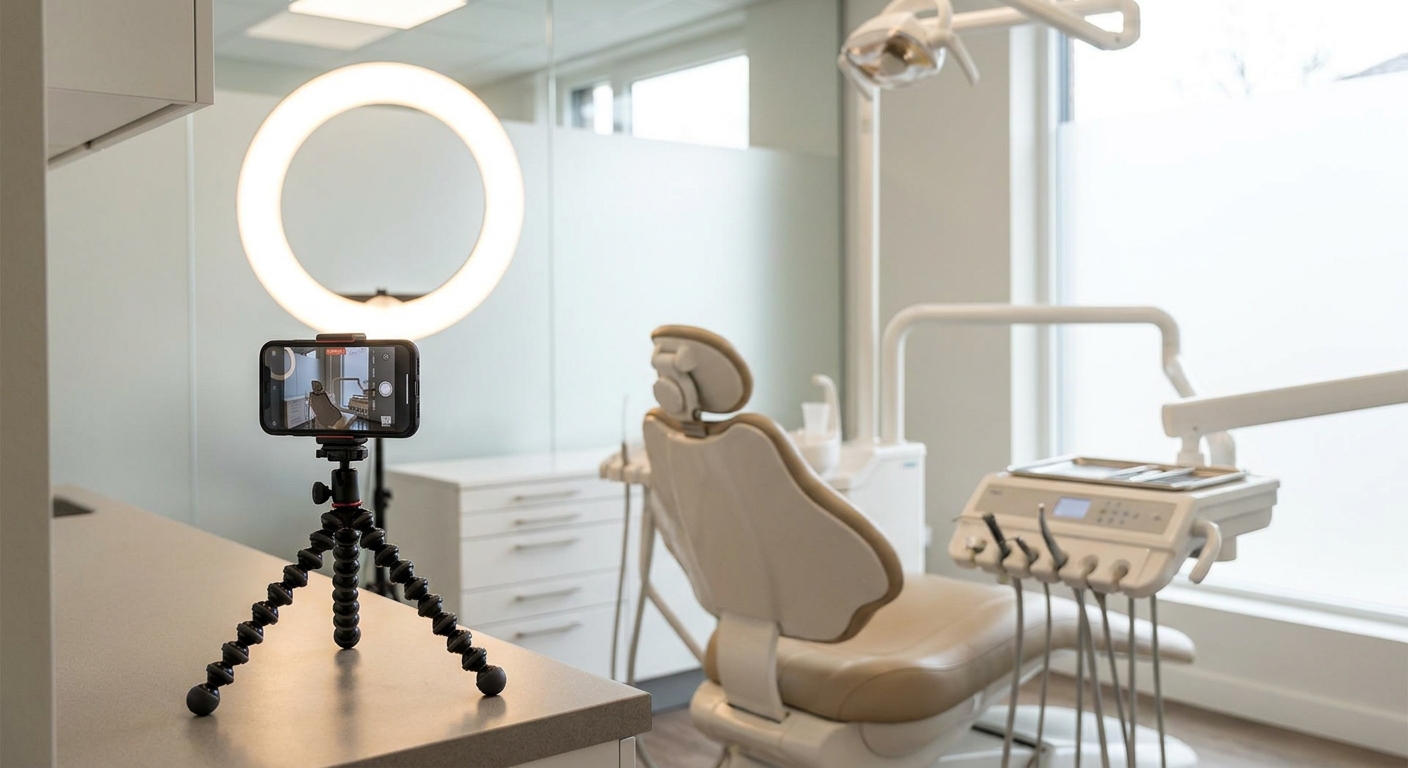

Smartphone on a small tripod with a ring light set up to film short video in a clean modern dental clinic
Hands holding a smartphone in landscape filming mode with a bright dental clinic in the background
Post and Caption

Where to Post and How to Caption for Patients

One script can become five posts. Film it once, then upload the same clip natively to every platform where your future patients already spend time. Native uploads, not shared links, are what each platform actually pushes to new viewers.

The Platforms That Matter for a Local Practice

Post to Instagram Reels, TikTok, and YouTube Shorts as your three core channels, then reuse the clip on your Facebook page and your Google Business Profile. Embedding the video on a relevant page of your website helps it support your broader dental SEO at the same time. The same thirty-second clip can quietly do its job across all of these, reaching different people in each place.

Captions That Get Found and Get Booked

Lead the caption with the same question the video answers, so it matches how people search. Name your city or neighborhood somewhere natural, because you want local patients, not a global audience. Keep it conversational, add a few relevant tags, and end with the same soft call to action from the script. On-screen text captions inside the video matter even more than the written caption, since most viewers watch with the sound off and decide in the first second whether to stay.

Want a Content Engine, Not Just Ten Scripts?

Filming is the easy part. Turning that content into booked new patients takes a full system. We help dental practices plan content, get it in front of the right local audience, and capture the patients it brings in.

Make It a Habit

Build a Repeatable Weekly Filming Habit

Consistency is what separates practices that grow on social from practices that post twice and quit. The good news is that ten scripts, filmed two at a time, is more than a month of content. The goal is a small habit the whole team can sustain, not a heroic burst that burns everyone out.

Pick one filming day every two weeks and protect it like a patient appointment. Twenty minutes is enough to bank several videos.
Assign one owner of the schedule so it does not depend on whoever happens to feel inspired. A named owner is the difference between consistent and abandoned.
Keep a running list of patient questions from the front desk and the chair. That list is an endless supply of future scripts.
Rotate who appears on camera so the dentist is not the only face, and so the content shows the personality of the whole team.
Schedule posts in advance so a single filming session quietly publishes across the next two weeks without daily effort.

Practices that want this planned and managed for them lean on a marketing partner to own the calendar and the distribution, so the team only has to show up and film. See how steady content fits into real practice growth in our case studies.


A cheerful dental team of three posing together in a modern bright office, ready to create content
A smiling patient giving a thumbs up in a dental chair after a positive visit
Avoid These

The Dental Video Mistakes That Kill Reach

Most dental videos that flop fail for the same few reasons, and every one of them is easy to fix. Avoid these and your content will outperform practices that are technically more polished.

The Slow Open and the Hard Sell

The most common killer is a slow start. Opening with "Hi everyone, welcome to our page" loses viewers before you say anything useful. Lead with the hook, always. The second common mistake is making the whole video a sales pitch. People came for an answer, not an advertisement, so deliver real value first and keep the call to action soft and at the end. A video that helps will book more patients than a video that sells.

Trying to Be Perfect, and Trying to Cover Everything

Waiting for perfect lighting, a perfect take, or a perfect script is how most practices end up posting nothing at all. Patients connect with real and warm, not flawless. The other trap is cramming several topics into one clip. One video should answer one question. If you find yourself drifting, that is a second video, not a longer one. Tight, single-topic clips hold attention and are far easier to film. Treat your content as one piece of a complete dental marketing services system, not a standalone gamble.

Measure What Matters

How to Tell If Your Videos Are Booking Patients

Likes feel good, but they do not fill the schedule. Measure the metrics that actually connect content to new patients, and you will know which scripts to film more of and which to retire.

A confident dentist holding a smartphone and smiling in a modern clinic after publishing short video content

Watch Retention and Saves Before Likes

The most useful early signals are how long people watch and how many save or share the video. High retention in the first three seconds tells you the hook is working. Saves and shares tell you the content was genuinely useful, which is what the platforms reward with more reach. Comments asking real questions are gold, because a person who comments is one short step from messaging you. Track these instead of vanity likes and you will quickly see which of the ten scripts deserves a sequel.

Connect the Video to a Booked Visit

The metric that matters most is whether the video leads to a conversation. Watch for new direct messages, profile visits, website clicks, and calls that reference something they saw. The only way to know is to ask new patients how they found you and to track it. And remember that the video is only half the job. When a viewer finally reaches out, your front desk has to respond fast and warmly, which is exactly where a strong speed-to-lead playbook turns attention into a booked chair. Industry resources like Dental Economics consistently point to follow-up and patient experience, not raw reach, as the real growth drivers.

Key Takeaways: Filming Dental Video That Books Patients

Short video is the fastest way for a local stranger to meet and trust your practice before they ever call.
The ten scripts here each answer a real, high-intent patient question, from implant cost to first-visit nerves to 2am tooth pain.
Lead every video with the hook in the first three seconds. A slow open is the number one reason dental videos lose viewers.
You do not need a studio. A smartphone, a light, and a tripod produce the authentic, in-office video patients trust most.
Film several scripts in one sitting and schedule them out. Consistency beats volume, and ten scripts is more than a month of content.
Post natively to Reels, TikTok, and Shorts, then reuse the same clip on Facebook, your Google Business Profile, and your website.
Keep the call to action soft and helpful. Deliver real value first, then invite them to reach out in the final line.
Video earns attention, but fast, friendly follow-up books the patient. Pair content with a tight speed-to-lead process.
Frequently Asked Questions

Common Questions About Dental Video Content

The videos that work best answer the real questions patients are already asking, such as what implants cost, whether veneers are worth it, what a first visit is like, and how to handle a dental emergency. Each of the ten scripts on this page maps to a high-intent question people type into Google and search on social platforms. When your video answers the exact thing someone is worried about, it earns attention and positions your practice as the helpful, trustworthy choice.

Aim for 20 to 45 seconds for most of these scripts. Short video rewards a strong hook in the first three seconds and a clear payoff before viewers lose interest. A 30-second clip is long enough to deliver real value on one topic and short enough to keep people watching to the call to action. If a topic genuinely needs more time, it is usually better to split it into two videos than to stretch one past a minute.

No. A recent smartphone, decent natural or ring light, and a small tripod are all you need. Patients trust real, in-office footage far more than polished studio production, because it feels authentic and local. Film in a clean, well-lit part of your operatory or front office, keep the phone steady, and make sure your audio is clear. The script and the hook matter far more than the camera.

Consistency beats volume. One to three short videos a week, posted reliably, will outperform a burst of ten videos followed by months of silence. The ten scripts here give you several weeks of content if you film one or two at a time. Batch filming a few in one sitting, then scheduling them out, is the most realistic way for a busy practice to stay consistent without it taking over the week.

The dentist is ideal for clinical and trust-building topics, because patients want to see and hear the person who will care for them. Hygienists, treatment coordinators, and front-desk team members are great for warmer, lighter content and behind-the-scenes clips. Rotating faces keeps the content fresh and shows the personality of the whole team. The most important trait on camera is warmth and clarity, not polish.

The hook should name the viewer's exact worry or curiosity before they have a chance to scroll. Strong dental hooks call out a pain point ('throbbing tooth pain at 2am?'), challenge a belief ('your dental insurance is not really insurance'), or promise a specific payoff ('the five questions that tell you if a dentist is worth your trust'). Every script on this page leads with a hook written to stop the scroll. Avoid slow, generic openings like 'Hi, welcome to our channel.'

Yes, but keep it soft and human. End with one clear, low-pressure invitation such as 'message us and we will walk you through it' or 'book a consult and we will show you a preview first.' A hard sell on a short educational video usually backfires. The goal is to be so genuinely helpful that booking feels like the natural next step, and to make that step obvious in the final line.

Post natively on Instagram Reels, TikTok, and YouTube Shorts, and reuse the same clip on Facebook and your Google Business Profile. Native uploads on each platform reach far more people than a shared link. Embedding the videos on relevant pages of your website also helps your search visibility. Posting the same script across platforms is efficient and lets each audience find you where they already spend time.

Video alone does not book the patient. It earns attention, builds trust, and brings people to the point of reaching out. What converts that interest into a booked visit is fast, friendly follow-up when they call or message. Practices that pair consistent helpful content with a tight response process see the strongest results, which is why video and a strong speed-to-lead process work best together.

Mine the questions you already answer all day. Every time a patient asks something at the front desk or in the chair, that is a video. You can also use AI prompts to generate fresh, on-brand ideas in seconds and turn them into scripts. The ten on this page are a starting library you can refilm seasonally, update as treatments change, and expand with your own most-asked questions.

Not at all, and it gets easier fast. Read the script a few times so the talking points feel natural, then talk to the camera like you would talk to a patient across the chair. A few imperfect takes are normal. Patients connect with real, warm, slightly imperfect humans far more than with a flawless performance. The first handful of videos are the hardest, and confidence builds quickly with reps.

Absolutely, and it usually produces better content. Assign one person to own the filming schedule, let team members suggest topics from their daily patient conversations, and rotate who appears on camera. Spreading the work keeps it sustainable and showcases the practice's culture, which is itself a powerful reason patients choose one office over another. A small weekly habit shared across the team is far easier than one person carrying it all.

Ready to Turn Content Into Booked Patients?

These ten scripts get you filming this week. The bigger win is a full system that plans your content, gets it in front of the right local patients, and captures every inquiry it creates. See our case studies to learn how content and follow-up grow real practices.