How to Close More Dental Implant Cases and High-Value Treatment Plans
The definitive playbook for dental practices ready to increase case acceptance rates on implants, Invisalign, cosmetic dentistry, and full-arch restorations. Backed by data from practices generating $1M+ annually in elective procedures.
The Dental Case Acceptance Problem Most Practices Refuse to Admit
Here is the uncomfortable truth: two-thirds of dental practices have case acceptance rates between 20-50% according to the Levin Group Annual Practice Survey. For high-value procedures like dental implants and full-arch restorations, that number drops even further. For every three patients who need implants or comprehensive cosmetic work, two walk out the door and never come back.
Why Most Dental Practices Lose $500K+ in Annual Production
Think about the math: if your practice diagnoses $2.5 million in elective and high-value treatment annually but only closes 35%, you are collecting $875,000. Increase that acceptance rate to 55% and you add $500,000 in production without spending a single dollar on new patient acquisition or dental implant marketing. Case acceptance rate is the single highest-leverage variable in dental practice revenue, more impactful than doubling new patient flow.
The Difference Between Diagnosing Treatment and Selling Treatment
The problem is not clinical skill. Most dentists spent years perfecting their craft in residency and continuing education. The problem is that dental schools teach you how to diagnose and treat, but they never teach you how to help patients say yes to the treatment they need. This guide breaks down every element of closing high-value dental cases, from patient psychology to the exact scripts, systems, and technology that top-producing practices use.
The Psychology Behind Every "Let Me Think About It"
When a patient says "let me think about it," they are not going home to research dental implant materials or compare surgical techniques. They are processing an emotional decision through a rational lens. Understanding this distinction is the foundation of every successful case presentation in dentistry.
Research from the Journal of Dental Research shows that patients who feel emotionally safe during the consultation are 4.2 times more likely to accept treatment compared to those who feel rushed or pressured. The consultation is not a sales pitch. It is a guided discovery process where the patient arrives at their own conclusion that treatment is the right choice.
The Four Emotional Barriers to Dental Case Acceptance
How to Read Patient Buying Signals During Dental Consultations
Watch for verbal and physical cues that indicate readiness: patients who lean forward, ask about timelines ("How long does recovery take?"), or mention specific outcomes ("I just want to eat normally again") are signaling emotional investment. When you hear these signals, stop educating and start closing. Ask: "It sounds like this is important to you. Would you like to talk about how we can get started?"

The 5-Step Dental Treatment Presentation Framework That Converts at 60%+
Top-performing dental practices do not wing their case presentations. They follow a repeatable, structured framework that guides patients from awareness to acceptance. Here is the five-step process used by practices with case acceptance rates above 60%.
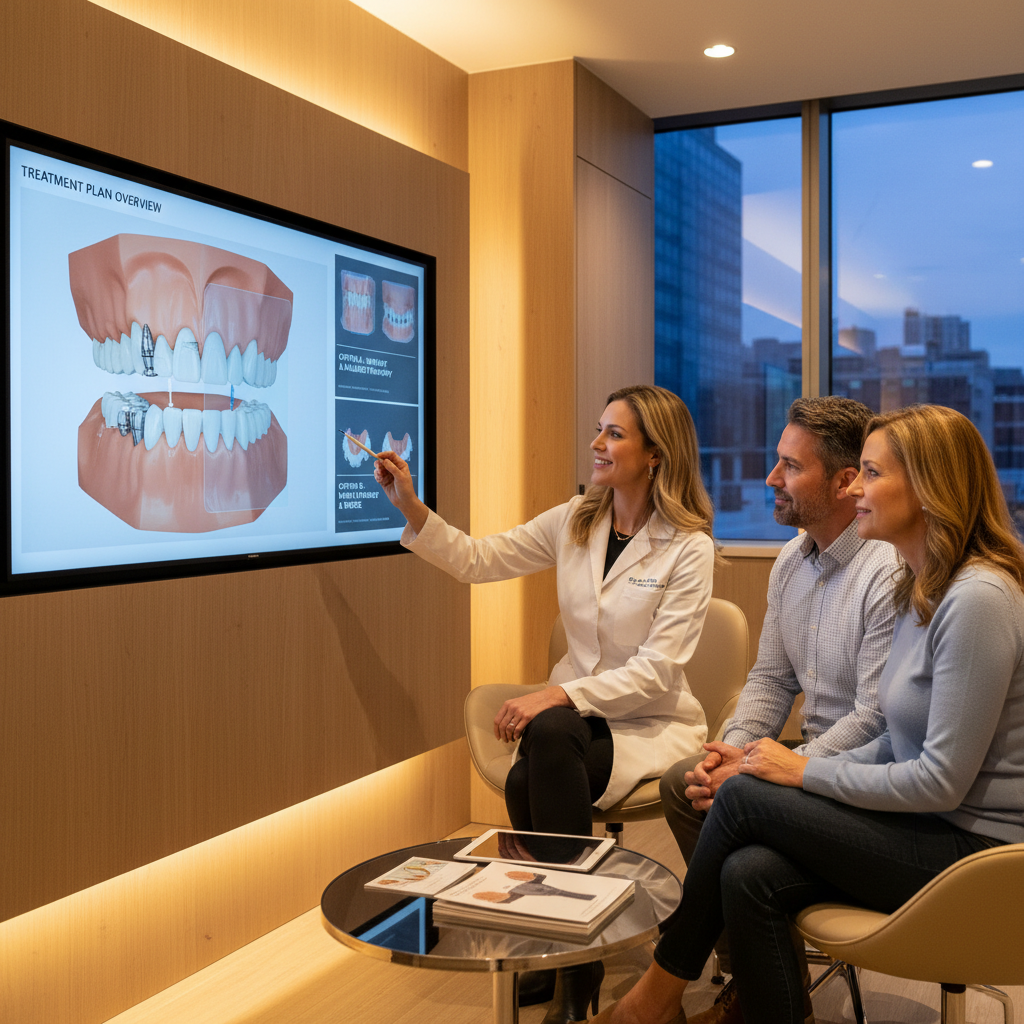
Step 1: Discovery Questions That Uncover Patient Motivation
Spend the first 10 minutes asking open-ended questions. What brought them in today? What bothers them most about their current situation? What would their ideal outcome look like? Document their exact words. You will use their own language when presenting the solution.
Step 2: Co-Discovery with Intraoral Photos and Digital Scans
Use intraoral photos, X-rays, and digital scans to show patients what you see. Do not lecture. Ask questions like 'Can you see this dark area here?' and 'What do you think is happening with this tooth?' When patients discover their own problems, they own the urgency to fix them.
Step 3: Digital Smile Design and Before-After Visualization
Before discussing the clinical procedure, show patients what life looks like after treatment. Use before-and-after photos of similar cases, digital smile design simulations, or 3D models. Anchor their decision to the emotional outcome (confidence, eating comfortably, smiling freely) not the clinical process.
Step 4: Presenting One Clear Dental Treatment Recommendation
Present your recommended treatment plan as a single, clear recommendation. Do not offer a buffet of options with varying quality levels. Say: 'Based on everything we have discussed, here is what I recommend and why.' If there are phased options, present them as a timeline, not competing alternatives.
Step 5: The Treatment Coordinator Handoff
After the clinical recommendation, introduce the treatment coordinator by saying: 'Sarah is going to walk you through the scheduling, timeline, and financial options. She is going to make this as easy as possible for you.' Then leave the room. The financial conversation happens separately from the clinical relationship.
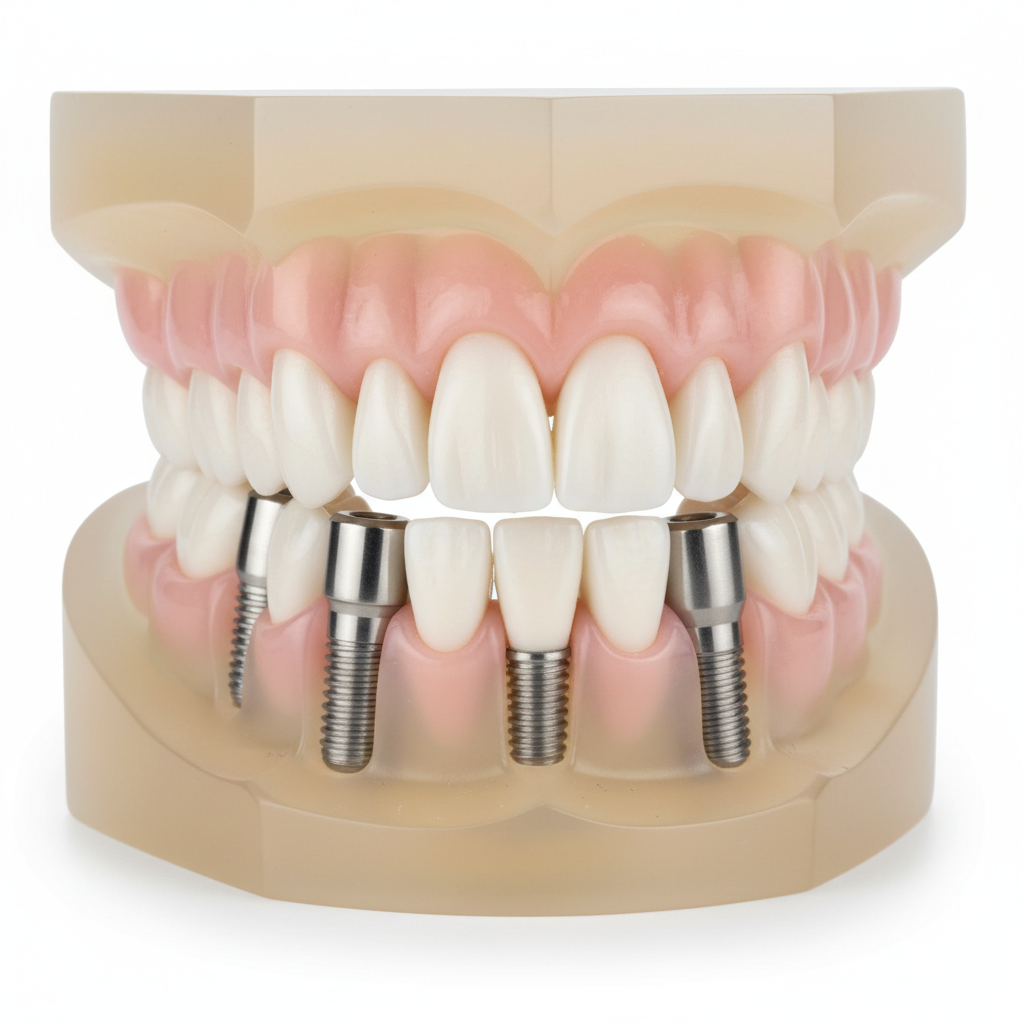
Closing All-on-4 and Full-Arch Dental Implant Cases
All-on-4 and full-arch implant cases represent the highest-value procedures in dentistry, typically ranging from $25,000 to $65,000 per arch. The dental implant market is projected to grow from $5.09 billion in 2025 to $9.08 billion by 2033, meaning more patients are searching for and considering these procedures than ever before. A strong full-arch dental implant marketing strategy paired with a solid case presentation system is essential.
What Patients Need to Know Before Committing to Full-Arch Implants
Patients are not just choosing a dental procedure. They are choosing a life-changing transformation that requires significant financial commitment and emotional courage. The practices that consistently close full-arch cases invest in patient education materials specifically designed for implant patients, offer flexible financing with monthly payments under $500, and use digital technology to show patients their specific results before surgery. All-on-4 implants have a cumulative survival rate of 94.8-98% at 5-10 years, a powerful reassurance to share during consultations.
The Full-Arch Case Acceptance Closing Checklist
Converting Invisalign Consultations Into Started Cases
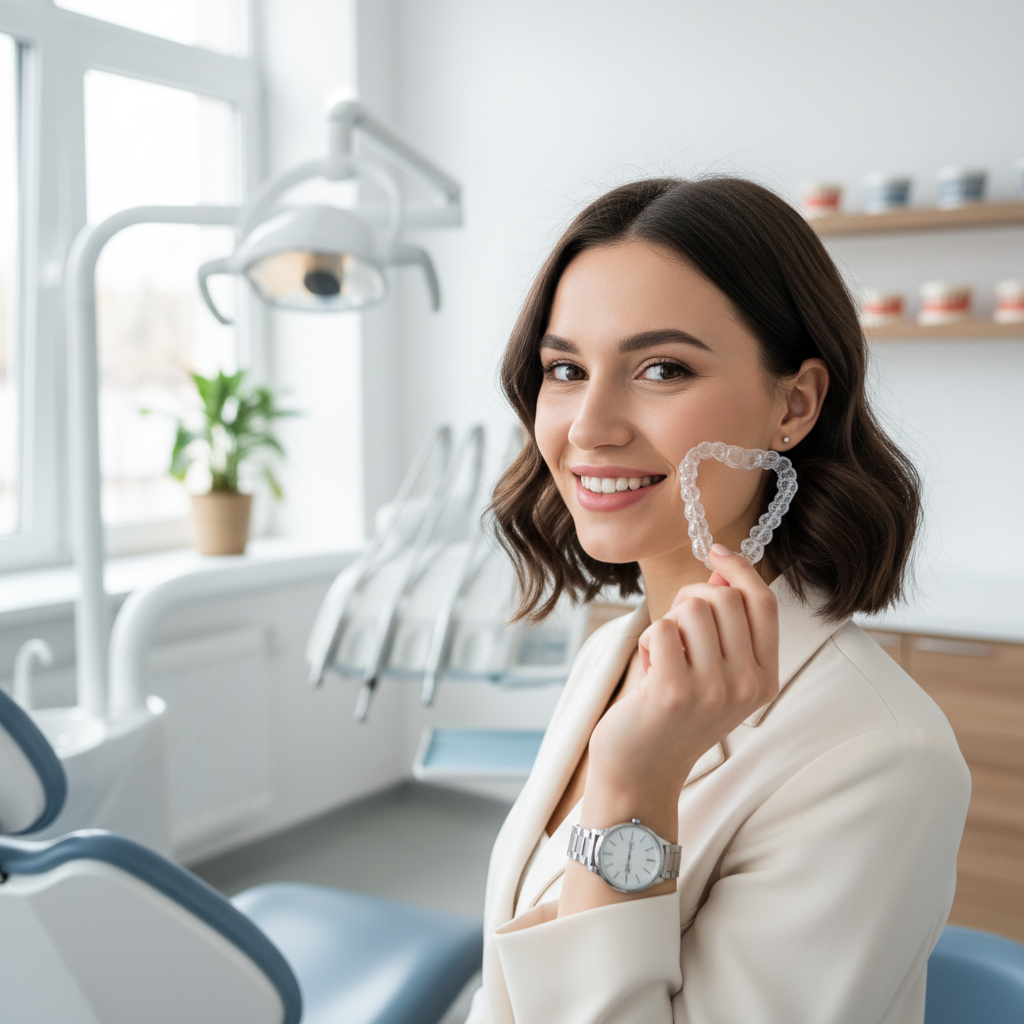
Invisalign and clear aligner cases sit in a unique position. The average case value ($4,000-$8,000) is high enough to require careful case presentation but low enough that financing can make it feel like a no-brainer. The biggest challenge is not affordability. It is urgency. Unlike a broken tooth or failing dentition, crooked teeth are a cosmetic concern that patients have lived with for years.
The Smile Preview Close: Using iTero Scans to Convert Same-Day
During the initial consultation, scan the patient with an iTero or similar intraoral scanner and generate an Invisalign Outcome Simulator result in real time. When a patient sees their own teeth straightening on screen in under five minutes, the abstract becomes concrete. Pair this with a same-day start incentive ($500 off or a free retainer set) and your Invisalign conversion rate will climb above 70%.
How to Run an Invisalign Open House That Converts 50% of Attendees
Host a monthly event where prospective patients can get free scans, see their simulated results, and receive a special event-only pricing package. These events typically convert 40-60% of attendees into started cases because the group environment creates social proof and the limited-time offer creates urgency. Do not forget the adult patient who says "I have always wanted straight teeth." They need permission to invest in themselves, not more clinical information.

Financial Presentation Strategies That Remove Sticker Shock
Why You Should Never Present the Total Cost First
Money is the number one stated reason patients decline treatment. But it is rarely about whether they can afford it. It is about how the investment is framed. A $25,000 dental implant treatment plan sounds impossible. A $399/month payment plan for the smile of your dreams sounds reasonable. Same treatment. Same cost. Completely different psychological response. The best treatment coordinators never say the total cost first. They present the monthly payment.
Three Payment Paths Every Dental Practice Should Offer
Offer at least three payment paths: insurance plus out-of-pocket, third-party financing (CareCredit, Proceed Finance, LendingClub), and an in-house payment plan for patients who do not qualify for external financing. Having a backup option for every financial scenario eliminates the "I cannot afford it" objection entirely. One critical rule: never let the doctor present the financial options. Separate the clinical and financial conversations. Always.
Want Us to Audit Your Case Acceptance Process?
Get a free 15-minute case acceptance review. We will analyze your presentation flow, follow-up system, and dental marketing pipeline, then show you exactly where cases are falling through the cracks.
The 7 Most Common Dental Patient Objections and How to Overcome Each One
Turning Patient Objections Into Trust-Building Conversations
Every objection is an unspoken question. When you reframe objections as questions, they become opportunities to build trust rather than roadblocks to closing. Here are the seven objections you will hear most frequently during dental case presentations, and the framework for addressing each one.

"I need to think about it."
This means they do not have enough information to feel confident. Ask: 'I completely understand. Can you help me understand what part you would like to think about most? Is it the procedure itself, the timeline, or the investment?' This reopens dialogue without pressure.
"I need to talk to my spouse."
Offer to schedule a joint consultation: 'That makes perfect sense. Would it be helpful to have your spouse join us for a 15-minute conversation so they can see what we discussed today and ask any questions?' Also send them home with a summary sheet and financing pre-approval letter.
"It costs too much."
Reframe from cost to value: 'I hear you. Let me ask you this, what is it worth to you to eat comfortably again and smile with confidence? Most of our patients invest around $350 per month, less than a car payment, for results that last a lifetime.'
"I am afraid of the pain."
Address head-on with specifics: 'That is our patients most common concern before treatment, and their most common feedback afterward is that it was much easier than they expected. We offer IV sedation so you will sleep through the entire procedure and wake up with new teeth.'
"I want to get a second opinion."
Welcome it: 'Absolutely, I encourage that. This is a significant decision and you should feel 100% confident. I am happy to send your scans and treatment plan to any provider you choose. Most patients who compare end up choosing us because of our technology and results.'
"I have had a bad experience at a dentist before."
Validate and differentiate: 'I am sorry you went through that. A lot of our patients come to us after a negative experience somewhere else, and that is exactly why we do things differently. Can I show you our reviews and walk you through how we handle comfort and communication?'
"Can I just do a temporary fix for now?"
Explain the cost of delay: 'We can certainly discuss short-term options. I want to be transparent though: a temporary approach will likely cost $X now and the full treatment will still be needed within 12-18 months, at that point it may be more complex and costly. Starting the definitive treatment now often saves both time and money.'
Building the Kind of Patient Trust That Closes High-Value Dental Cases
How Google Reviews Impact Dental Case Acceptance Rates
Trust is not built during the case presentation. It begins the moment a patient discovers you online. Your Google reviews are your first trust signal. Practices with 200+ reviews and a 4.8+ rating close high-value cases at 2x the rate of practices with fewer than 50 reviews. Make review generation an automatic part of your patient flow, not something your front desk does when they remember. Effective dental marketing starts with your online reputation.
What High-Value Patients Look for on Your Dental Website
Patients researching $20,000+ dental procedures will spend 8-15 minutes on your website before calling. If your site does not have before-and-after galleries, video testimonials, doctor credentials with advanced training listed, and clear information about financing options, you are losing patients before they ever call. A professional dental website design is not optional for practices targeting high-value cases.
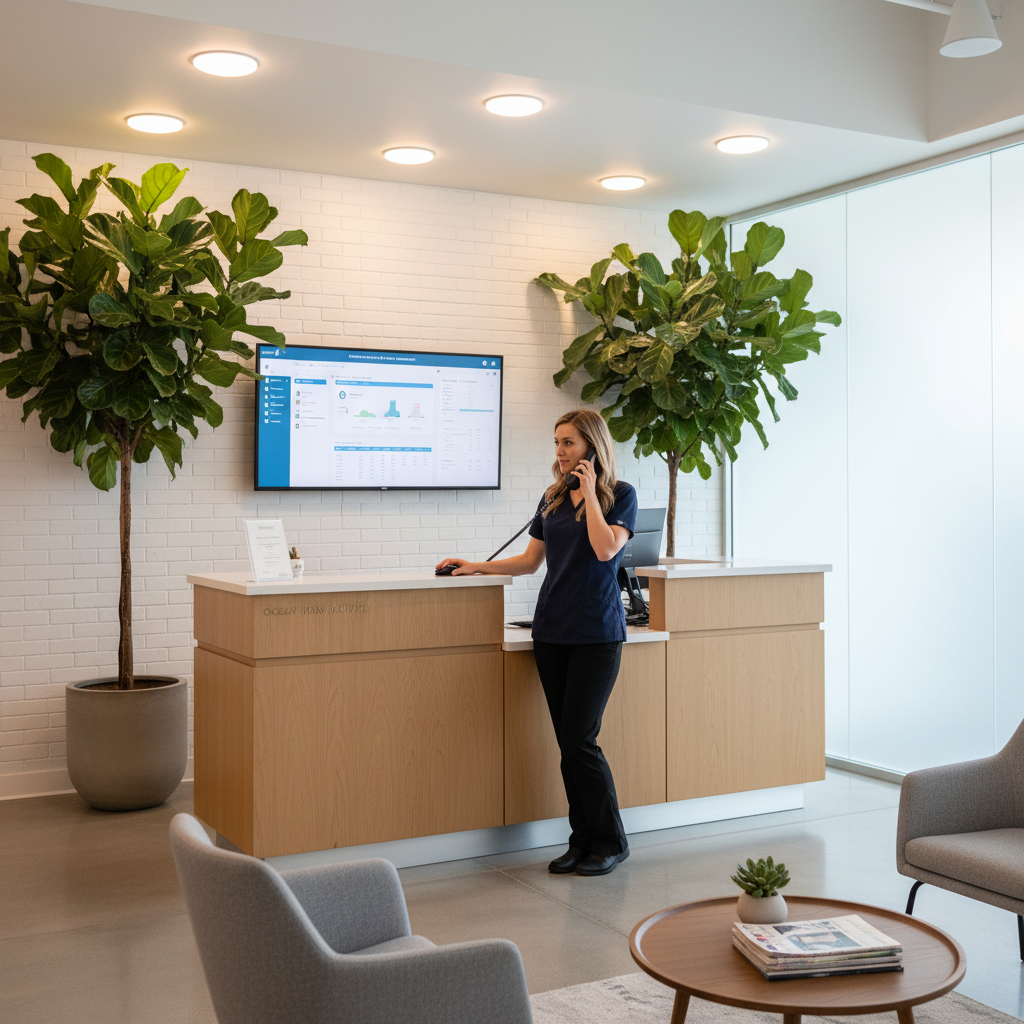
In the office, trust is built through consistency and competence. Every team member should know the patient's name, their concerns, and their treatment plan. Nothing destroys trust faster than having to repeat your story to three different people.

The 90-Day Patient Follow-Up System That Recovers Lost Dental Cases
The Exact 90-Day Follow-Up Sequence for Unscheduled Treatment Plans
Most dental practices follow up once, maybe twice, and then move on. Here is the structured 90-day sequence: Day 1-2: personal phone call from the treatment coordinator. Day 7: educational email with patient success stories. Day 14: second phone call offering a follow-up consultation. Day 30: personalized letter from the doctor. Day 60: phone call with a financing incentive. Day 90: final personal letter with an open invitation.
Why 60% of Patients Accept After the Third Follow-Up Contact
The data is clear: 60% of patients who eventually accept high-value treatment do so after the third follow-up contact. Patients who declined a $30,000 implant case in January have been known to call back 18 months later ready to proceed. The only reason they called you instead of a competitor is because you stayed in touch. Automate as much as possible using your CRM. Tools like AI-powered appointment setters can handle initial outreach and route warm leads to your team.
The Dental Technology That Closes Cases for You
Best Intraoral Scanners for Increasing Case Acceptance in 2026
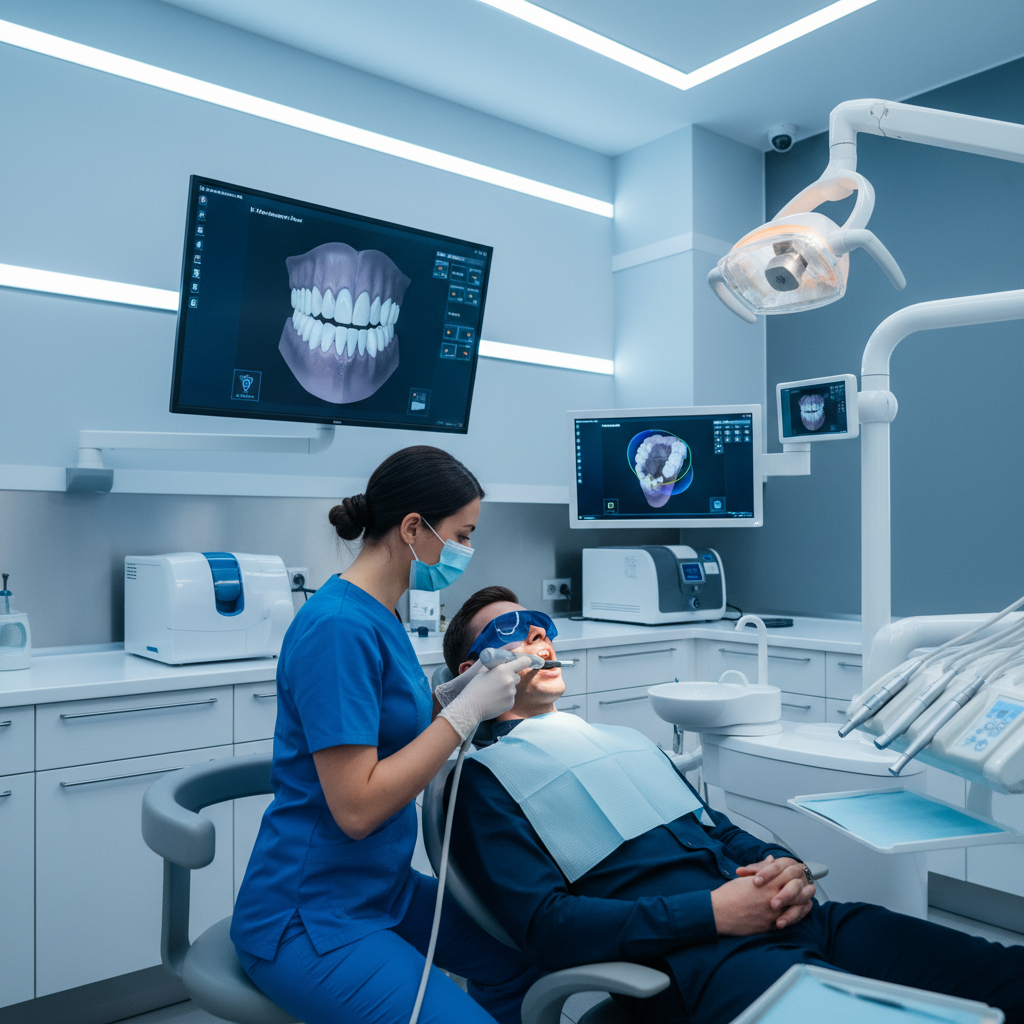
Intraoral scanners (iTero, 3Shape TRIOS, Medit i700) are the single highest-ROI technology investment for dental case acceptance. When patients see a 3D model of their own mouth on screen, the diagnosis stops being abstract. Add a smile simulation tool and you bridge the gap between "I need treatment" and "I want treatment." Practices using digital smile design report a 30-50% increase in cosmetic and implant case acceptance. CBCT scanners serve a dual purpose: essential for implant planning, and powerful for showing patients a 3D reconstruction that transforms a scary unknown into a concrete plan.
CRM and Automation Tools for Dental Patient Follow-Up
A properly configured CRM (GoHighLevel, HubSpot, or Dentrix-integrated systems) automates the 90-day nurture sequence, tracks lead sources, and gives your team visibility into which patients need attention. Pair this with SEO-optimized dental marketing content and targeted paid advertising to keep a steady pipeline of qualified patients flowing into your consultation calendar.

Training Your Entire Dental Team to Think Like Closers
The Daily Morning Huddle That Increases Case Acceptance by 20%
Case acceptance is not just the dentist's job. Every person in your practice influences whether a patient says yes. Start with a daily morning huddle: spend 10 minutes reviewing the schedule, identifying patients with pending treatment plans, and assigning responsibility for case-related conversations. The hygienist should know that Mrs. Johnson was presented with an implant plan last month so she can naturally ask about it during the cleaning.
Treatment Coordinator Training: The Highest-ROI Investment in Dentistry
Invest in formal dental sales training for your treatment coordinator and front desk team. They need scripts, role-playing practice, and objection-handling training. The ROI on treatment coordinator training is typically 10-20x within the first quarter. Track individual performance, know each team member's conversion rate on case presentations, and explore our dental practice growth packages for structured training programs.
Measuring Dental Practice Revenue: KPIs for Case Acceptance
The 6 Case Acceptance Metrics Every Dental Practice Should Track Monthly
You cannot improve what you do not measure. Yet most dental practices track production and collections but have no idea what their actual case acceptance rate is, especially for high-value procedures. Track these metrics monthly and compare against industry benchmarks.
Total value of accepted treatment divided by total value of presented treatment. Track overall and by procedure category (implants, cosmetic, restorative).
Target: 55%+Mean value of accepted cases. This tells you whether your team is effectively presenting comprehensive treatment plans or only closing smaller procedures.
Target: Increasing quarterlyPercentage of dental consultations that convert to scheduled treatment within 30 days. Identifies whether your case presentation process is effective.
Target: 40%+Percentage of initially-declined cases that convert after patient follow-up. This measures the effectiveness of your 90-day nurture sequence.
Target: 15-25%Average days between initial treatment plan presentation and case acceptance. Shorter timelines indicate a more compelling dental case presentation process.
Target: Under 14 daysTotal accepted production divided by total new patient consultations. This combines dental marketing efficiency with case acceptance effectiveness.
Target: $2,500+Key Takeaways: How to Close More Dental Cases
Common Questions About Dental Case Acceptance and Closing Strategies
The national average case acceptance rate is 50-60% according to the Levin Group, but two-thirds of practices fall between 20-50%. Top-performing practices achieve 85%+ by implementing structured presentation frameworks, financial flexibility, and consistent follow-up systems. Even a 10% improvement can mean hundreds of thousands in additional annual revenue.
The key is to lead with the transformation, not the price. Start by painting a vivid picture of life after treatment. Use before-and-after photos, patient testimonials, and digital smile simulations. Present monthly payment options first (e.g., '$399/month' instead of '$30,000'). Always separate the clinical presentation from the financial conversation, and have a trained treatment coordinator handle the money discussion.
Best practice is to have the dentist focus exclusively on clinical recommendations and patient outcomes. A dedicated treatment coordinator should handle financial discussions, payment plans, and insurance questions. This separation prevents the dentist from unconsciously 'pre-qualifying' patients based on perceived ability to pay, and it keeps the clinical relationship focused on trust and expertise.
Implement a structured 90-day sequence: call at 48 hours, email at 1 week, call at 2 weeks, email at 30 days, call at 60 days, and a final personal letter at 90 days. 60% of patients who eventually accept high-value treatment do so after the third follow-up contact. After 90 days, move them to a quarterly nurture sequence. Never mark a lead as dead.
Intraoral scanners and digital smile design software consistently deliver the highest ROI for case acceptance. When patients can see a realistic preview of their results before committing, acceptance rates for cosmetic and implant cases increase by 30-50%. The iTero, 3Shape TRIOS, and Medit i700 are the most popular options in 2026.
You do not compete on price. You compete on trust, expertise, and outcomes. Document your results with before-and-after galleries, video testimonials, and published case studies. Highlight your advanced training, technology investments, and success rates. Patients choosing $25,000+ procedures want the best outcome, not the cheapest option.
Invest in three areas: visual technology (CBCT scans and digital smile previews shown during consultation), financial flexibility (offer three payment paths including third-party financing with monthly payments under $500), and patient education materials designed specifically for implant patients. Practices that implement all three see implant acceptance rates rise from the 45% average to 65-75%.
The average close rate for full arch cases ($25,000-$65,000 per arch) is 35-45% at most practices. Top-performing practices with structured presentation systems, dedicated consultation rooms, and trained treatment coordinators achieve 60-75%. The gap represents significant revenue opportunity for practices willing to invest in their case presentation process.
Improving case acceptance from 45% to 65% on just 10 implant consultations per month at $4,000 average case value adds $96,000 in annual revenue. For full arch cases, the impact is even larger. Research shows that case acceptance rate is the single highest-leverage variable in dental practice profitability, more impactful than doubling new patient flow.
Yes. Treatment coordinators typically increase case acceptance by 15-20% according to industry data. A dedicated TC handles financial conversations, follow-up sequences, and objection handling, freeing the doctor to focus on clinical recommendations. The ROI on a good treatment coordinator is typically 10-20x within the first quarter.
Ready to Close More High-Value Dental Cases?
Get a free case acceptance audit for your dental practice. We will analyze your current case presentation process, follow-up systems, and dental marketing pipeline, then show you exactly where you are losing cases and how to fix it. See our case studies to learn how we helped one practice grow from $0 to $220K/month.
How to Close More Dental Implant Cases and High-Value Treatment Plans
The definitive playbook for dental practices ready to increase case acceptance rates on implants, Invisalign, cosmetic dentistry, and full-arch restorations. Backed by data from practices generating $1M+ annually in elective procedures.
The Dental Case Acceptance Problem Most Practices Refuse to Admit
Here is the uncomfortable truth: two-thirds of dental practices have case acceptance rates between 20-50% according to the Levin Group Annual Practice Survey. For high-value procedures like dental implants and full-arch restorations, that number drops even further. For every three patients who need implants or comprehensive cosmetic work, two walk out the door and never come back.
Why Most Dental Practices Lose $500K+ in Annual Production
Think about the math: if your practice diagnoses $2.5 million in elective and high-value treatment annually but only closes 35%, you are collecting $875,000. Increase that acceptance rate to 55% and you add $500,000 in production without spending a single dollar on new patient acquisition or dental implant marketing. Case acceptance rate is the single highest-leverage variable in dental practice revenue, more impactful than doubling new patient flow.
The Difference Between Diagnosing Treatment and Selling Treatment
The problem is not clinical skill. Most dentists spent years perfecting their craft in residency and continuing education. The problem is that dental schools teach you how to diagnose and treat, but they never teach you how to help patients say yes to the treatment they need. This guide breaks down every element of closing high-value dental cases, from patient psychology to the exact scripts, systems, and technology that top-producing practices use.
The Psychology Behind Every "Let Me Think About It"
When a patient says "let me think about it," they are not going home to research dental implant materials or compare surgical techniques. They are processing an emotional decision through a rational lens. Understanding this distinction is the foundation of every successful case presentation in dentistry.
Research from the Journal of Dental Research shows that patients who feel emotionally safe during the consultation are 4.2 times more likely to accept treatment compared to those who feel rushed or pressured. The consultation is not a sales pitch. It is a guided discovery process where the patient arrives at their own conclusion that treatment is the right choice.
The Four Emotional Barriers to Dental Case Acceptance
How to Read Patient Buying Signals During Dental Consultations
Watch for verbal and physical cues that indicate readiness: patients who lean forward, ask about timelines ("How long does recovery take?"), or mention specific outcomes ("I just want to eat normally again") are signaling emotional investment. When you hear these signals, stop educating and start closing. Ask: "It sounds like this is important to you. Would you like to talk about how we can get started?"
The 5-Step Dental Treatment Presentation Framework That Converts at 60%+
Top-performing dental practices do not wing their case presentations. They follow a repeatable, structured framework that guides patients from awareness to acceptance. Here is the five-step process used by practices with case acceptance rates above 60%.
Discovery Questions That Uncover Patient Motivation
Spend the first 10 minutes asking open-ended questions. What brought them in today? What bothers them most about their current situation? What would their ideal outcome look like? Document their exact words. You will use their own language when presenting the solution.
Co-Discovery with Intraoral Photos and Digital Scans
Use intraoral photos, X-rays, and digital scans to show patients what you see. Do not lecture. Ask questions like 'Can you see this dark area here?' and 'What do you think is happening with this tooth?' When patients discover their own problems, they own the urgency to fix them.
Digital Smile Design and Before-After Visualization
Before discussing the clinical procedure, show patients what life looks like after treatment. Use before-and-after photos of similar cases, digital smile design simulations, or 3D models. Anchor their decision to the emotional outcome (confidence, eating comfortably, smiling freely) not the clinical process.
Presenting One Clear Dental Treatment Recommendation
Present your recommended treatment plan as a single, clear recommendation. Do not offer a buffet of options with varying quality levels. Say: 'Based on everything we have discussed, here is what I recommend and why.' If there are phased options, present them as a timeline, not competing alternatives.
The Treatment Coordinator Handoff
After the clinical recommendation, introduce the treatment coordinator by saying: 'Sarah is going to walk you through the scheduling, timeline, and financial options. She is going to make this as easy as possible for you.' Then leave the room. The financial conversation happens separately from the clinical relationship.
Closing All-on-4 and Full-Arch Dental Implant Cases
All-on-4 and full-arch implant cases represent the highest-value procedures in dentistry, typically ranging from $25,000 to $65,000 per arch. The dental implant market is projected to grow from $5.09 billion in 2025 to $9.08 billion by 2033, meaning more patients are searching for and considering these procedures than ever before. A strong full-arch dental implant marketing strategy paired with a solid case presentation system is essential.
What Patients Need to Know Before Committing to Full-Arch Implants
Patients are not just choosing a dental procedure. They are choosing a life-changing transformation that requires significant financial commitment and emotional courage. The practices that consistently close full-arch cases invest in patient education materials specifically designed for implant patients, offer flexible financing with monthly payments under $500, and use digital technology to show patients their specific results before surgery. All-on-4 implants have a cumulative survival rate of 94.8-98% at 5-10 years, a powerful reassurance to share during consultations.
The Full-Arch Case Acceptance Closing Checklist
Converting Invisalign Consultations Into Started Cases
Invisalign and clear aligner cases sit in a unique position. The average case value ($4,000-$8,000) is high enough to require careful case presentation but low enough that financing can make it feel like a no-brainer. The biggest challenge is not affordability. It is urgency. Unlike a broken tooth or failing dentition, crooked teeth are a cosmetic concern that patients have lived with for years.
The Smile Preview Close: Using iTero Scans to Convert Same-Day
During the initial consultation, scan the patient with an iTero or similar intraoral scanner and generate an Invisalign Outcome Simulator result in real time. When a patient sees their own teeth straightening on screen in under five minutes, the abstract becomes concrete. Pair this with a same-day start incentive ($500 off or a free retainer set) and your Invisalign conversion rate will climb above 70%.
How to Run an Invisalign Open House That Converts 50% of Attendees
Host a monthly event where prospective patients can get free scans, see their simulated results, and receive a special event-only pricing package. These events typically convert 40-60% of attendees into started cases because the group environment creates social proof and the limited-time offer creates urgency. Do not forget the adult patient who says "I have always wanted straight teeth." They need permission to invest in themselves, not more clinical information.
Financial Presentation Strategies That Remove Sticker Shock
Why You Should Never Present the Total Cost First
Money is the number one stated reason patients decline treatment. But it is rarely about whether they can afford it. It is about how the investment is framed. A $25,000 dental implant treatment plan sounds impossible. A $399/month payment plan for the smile of your dreams sounds reasonable. Same treatment. Same cost. Completely different psychological response. The best treatment coordinators never say the total cost first. They present the monthly payment.
Three Payment Paths Every Dental Practice Should Offer
Offer at least three payment paths: insurance plus out-of-pocket, third-party financing (CareCredit, Proceed Finance, LendingClub), and an in-house payment plan for patients who do not qualify for external financing. Having a backup option for every financial scenario eliminates the "I cannot afford it" objection entirely. One critical rule: never let the doctor present the financial options. Separate the clinical and financial conversations. Always.
Want Us to Audit Your Case Acceptance Process?
Get a free 15-minute case acceptance review. We will analyze your presentation flow, follow-up system, and dental marketing pipeline, then show you exactly where cases are falling through the cracks.
The 7 Most Common Dental Patient Objections and How to Overcome Each One
Turning Patient Objections Into Trust-Building Conversations
Every objection is an unspoken question. When you reframe objections as questions, they become opportunities to build trust rather than roadblocks to closing. Here are the seven objections you will hear most frequently during dental case presentations, and the framework for addressing each one.
"I need to think about it."
This means they do not have enough information to feel confident. Ask: 'I completely understand. Can you help me understand what part you would like to think about most? Is it the procedure itself, the timeline, or the investment?' This reopens dialogue without pressure.
"I need to talk to my spouse."
Offer to schedule a joint consultation: 'That makes perfect sense. Would it be helpful to have your spouse join us for a 15-minute conversation so they can see what we discussed today and ask any questions?' Also send them home with a summary sheet and financing pre-approval letter.
"It costs too much."
Reframe from cost to value: 'I hear you. Let me ask you this, what is it worth to you to eat comfortably again and smile with confidence? Most of our patients invest around $350 per month, less than a car payment, for results that last a lifetime.'
"I am afraid of the pain."
Address head-on with specifics: 'That is our patients most common concern before treatment, and their most common feedback afterward is that it was much easier than they expected. We offer IV sedation so you will sleep through the entire procedure and wake up with new teeth.'
"I want to get a second opinion."
Welcome it: 'Absolutely, I encourage that. This is a significant decision and you should feel 100% confident. I am happy to send your scans and treatment plan to any provider you choose. Most patients who compare end up choosing us because of our technology and results.'
"I have had a bad experience at a dentist before."
Validate and differentiate: 'I am sorry you went through that. A lot of our patients come to us after a negative experience somewhere else, and that is exactly why we do things differently. Can I show you our reviews and walk you through how we handle comfort and communication?'
"Can I just do a temporary fix for now?"
Explain the cost of delay: 'We can certainly discuss short-term options. I want to be transparent though: a temporary approach will likely cost $X now and the full treatment will still be needed within 12-18 months, at that point it may be more complex and costly. Starting the definitive treatment now often saves both time and money.'
Building the Kind of Patient Trust That Closes High-Value Dental Cases
How Google Reviews Impact Dental Case Acceptance Rates
Trust is not built during the case presentation. It begins the moment a patient discovers you online. Your Google reviews are your first trust signal. Practices with 200+ reviews and a 4.8+ rating close high-value cases at 2x the rate of practices with fewer than 50 reviews. Make review generation an automatic part of your patient flow, not something your front desk does when they remember. Effective dental marketing starts with your online reputation.
What High-Value Patients Look for on Your Dental Website
Patients researching $20,000+ dental procedures will spend 8-15 minutes on your website before calling. If your site does not have before-and-after galleries, video testimonials, doctor credentials with advanced training listed, and clear information about financing options, you are losing patients before they ever call. A professional dental website design is not optional for practices targeting high-value cases.
In the office, trust is built through consistency and competence. Every team member should know the patient's name, their concerns, and their treatment plan. Nothing destroys trust faster than having to repeat your story to three different people.
The 90-Day Patient Follow-Up System That Recovers Lost Dental Cases
The Exact 90-Day Follow-Up Sequence for Unscheduled Treatment Plans
Most dental practices follow up once, maybe twice, and then move on. Here is the structured 90-day sequence: Day 1-2: personal phone call from the treatment coordinator. Day 7: educational email with patient success stories. Day 14: second phone call offering a follow-up consultation. Day 30: personalized letter from the doctor. Day 60: phone call with a financing incentive. Day 90: final personal letter with an open invitation.
Why 60% of Patients Accept After the Third Follow-Up Contact
The data is clear: 60% of patients who eventually accept high-value treatment do so after the third follow-up contact. Patients who declined a $30,000 implant case in January have been known to call back 18 months later ready to proceed. The only reason they called you instead of a competitor is because you stayed in touch. Automate as much as possible using your CRM. Tools like AI-powered appointment setters can handle initial outreach and route warm leads to your team.
The Dental Technology That Closes Cases for You
Best Intraoral Scanners for Increasing Case Acceptance in 2026
Intraoral scanners (iTero, 3Shape TRIOS, Medit i700) are the single highest-ROI technology investment for dental case acceptance. When patients see a 3D model of their own mouth on screen, the diagnosis stops being abstract. Add a smile simulation tool and you bridge the gap between "I need treatment" and "I want treatment." Practices using digital smile design report a 30-50% increase in cosmetic and implant case acceptance. CBCT scanners serve a dual purpose: essential for implant planning, and powerful for showing patients a 3D reconstruction that transforms a scary unknown into a concrete plan.
CRM and Automation Tools for Dental Patient Follow-Up
A properly configured CRM (GoHighLevel, HubSpot, or Dentrix-integrated systems) automates the 90-day nurture sequence, tracks lead sources, and gives your team visibility into which patients need attention. Pair this with SEO-optimized dental marketing content and targeted paid advertising to keep a steady pipeline of qualified patients flowing into your consultation calendar.
Training Your Entire Dental Team to Think Like Closers
The Daily Morning Huddle That Increases Case Acceptance by 20%
Case acceptance is not just the dentist's job. Every person in your practice influences whether a patient says yes. Start with a daily morning huddle: spend 10 minutes reviewing the schedule, identifying patients with pending treatment plans, and assigning responsibility for case-related conversations. The hygienist should know that Mrs. Johnson was presented with an implant plan last month so she can naturally ask about it during the cleaning.
Treatment Coordinator Training: The Highest-ROI Investment in Dentistry
Invest in formal dental sales training for your treatment coordinator and front desk team. They need scripts, role-playing practice, and objection-handling training. The ROI on treatment coordinator training is typically 10-20x within the first quarter. Track individual performance, know each team member's conversion rate on case presentations, and explore our dental practice growth packages for structured training programs.
Measuring Dental Practice Revenue: KPIs for Case Acceptance
The 6 Case Acceptance Metrics Every Dental Practice Should Track Monthly
You cannot improve what you do not measure. Yet most dental practices track production and collections but have no idea what their actual case acceptance rate is, especially for high-value procedures. Track these metrics monthly and compare against industry benchmarks.
Total value of accepted treatment divided by total value of presented treatment. Track overall and by procedure category (implants, cosmetic, restorative).
Target: 55%+Mean value of accepted cases. This tells you whether your team is effectively presenting comprehensive treatment plans or only closing smaller procedures.
Target: Increasing quarterlyPercentage of dental consultations that convert to scheduled treatment within 30 days. Identifies whether your case presentation process is effective.
Target: 40%+Percentage of initially-declined cases that convert after patient follow-up. This measures the effectiveness of your 90-day nurture sequence.
Target: 15-25%Average days between initial treatment plan presentation and case acceptance. Shorter timelines indicate a more compelling dental case presentation process.
Target: Under 14 daysTotal accepted production divided by total new patient consultations. This combines dental marketing efficiency with case acceptance effectiveness.
Target: $2,500+Key Takeaways
Common Questions About Dental Case Acceptance
The national average case acceptance rate is 50-60% according to the Levin Group, but two-thirds of practices fall between 20-50%. Top-performing practices achieve 85%+ by implementing structured presentation frameworks, financial flexibility, and consistent follow-up systems. Even a 10% improvement can mean hundreds of thousands in additional annual revenue.
The key is to lead with the transformation, not the price. Start by painting a vivid picture of life after treatment. Use before-and-after photos, patient testimonials, and digital smile simulations. Present monthly payment options first (e.g., '$399/month' instead of '$30,000'). Always separate the clinical presentation from the financial conversation, and have a trained treatment coordinator handle the money discussion.
Best practice is to have the dentist focus exclusively on clinical recommendations and patient outcomes. A dedicated treatment coordinator should handle financial discussions, payment plans, and insurance questions. This separation prevents the dentist from unconsciously 'pre-qualifying' patients based on perceived ability to pay, and it keeps the clinical relationship focused on trust and expertise.
Implement a structured 90-day sequence: call at 48 hours, email at 1 week, call at 2 weeks, email at 30 days, call at 60 days, and a final personal letter at 90 days. 60% of patients who eventually accept high-value treatment do so after the third follow-up contact. After 90 days, move them to a quarterly nurture sequence. Never mark a lead as dead.
Intraoral scanners and digital smile design software consistently deliver the highest ROI for case acceptance. When patients can see a realistic preview of their results before committing, acceptance rates for cosmetic and implant cases increase by 30-50%. The iTero, 3Shape TRIOS, and Medit i700 are the most popular options in 2026.
You do not compete on price. You compete on trust, expertise, and outcomes. Document your results with before-and-after galleries, video testimonials, and published case studies. Highlight your advanced training, technology investments, and success rates. Patients choosing $25,000+ procedures want the best outcome, not the cheapest option.
Invest in three areas: visual technology (CBCT scans and digital smile previews shown during consultation), financial flexibility (offer three payment paths including third-party financing with monthly payments under $500), and patient education materials designed specifically for implant patients. Practices that implement all three see implant acceptance rates rise from the 45% average to 65-75%.
The average close rate for full arch cases ($25,000-$65,000 per arch) is 35-45% at most practices. Top-performing practices with structured presentation systems, dedicated consultation rooms, and trained treatment coordinators achieve 60-75%. The gap represents significant revenue opportunity for practices willing to invest in their case presentation process.
Improving case acceptance from 45% to 65% on just 10 implant consultations per month at $4,000 average case value adds $96,000 in annual revenue. For full arch cases, the impact is even larger. Research shows that case acceptance rate is the single highest-leverage variable in dental practice profitability, more impactful than doubling new patient flow.
Yes. Treatment coordinators typically increase case acceptance by 15-20% according to industry data. A dedicated TC handles financial conversations, follow-up sequences, and objection handling, freeing the doctor to focus on clinical recommendations. The ROI on a good treatment coordinator is typically 10-20x within the first quarter.
Ready to Close More High-Value Dental Cases?
Get a free case acceptance audit for your dental practice. We will analyze your current case presentation process, follow-up systems, and dental marketing pipeline, then show you exactly where you are losing cases and how to fix it. See our case studies to learn how we helped one practice grow from $0 to $220K/month.